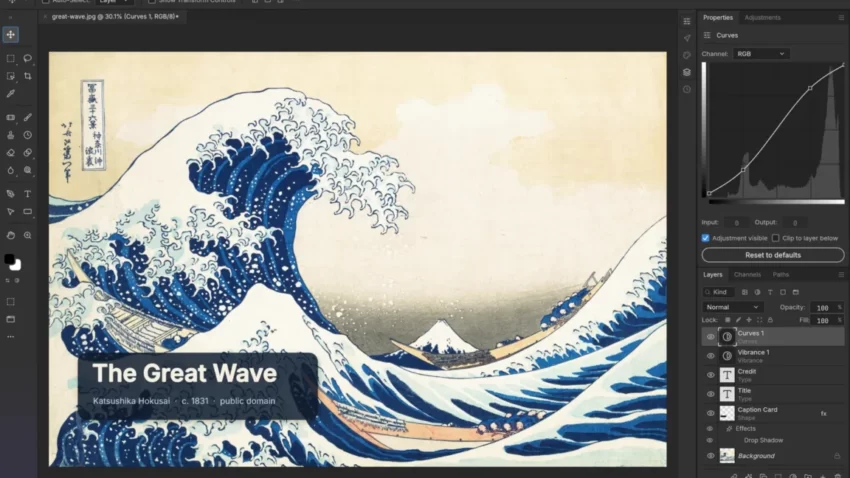
A developer behind Artcraft is making a bold play against Adobe, unveiling a new set of open source apps that aim to recreate the look, feel, and core functionality of Photoshop, Illustrator, Premiere, Lightroom, After Effects, InDesign, and Acrobat Pro. Brandon Thomas says the apps were built with Anthropic’s Claude Opus 5.5 and are intended as “clean-room replacements” for Adobe’s software, with the long-term goal of matching the originals closely enough to rival them on features and workflow.
Artcraft’s pivot from AI editing to Adobe-style apps
Artcraft began last year as a “controllable AI for artists,” focused on letting users make precise edits to AI-generated images and videos. Over the weekend, the project shifted direction with the debut of seven open source applications that mirror Adobe’s major creative tools. Thomas announced the lineup on Reddit, framing it as a direct challenge to expensive, closed software that many creators rely on every day.
The new apps are written in Rust, with WebAssembly versions available for use in a browser. According to Thomas, the project is not a superficial mockup but an attempt to build full replacements that behave like Adobe’s products while remaining open source under MIT and Apache licenses.
What the apps are meant to replace
The Artcraft suite is designed around familiar categories of creative work. Rather than inventing a new interface paradigm, the apps closely track the layout and purpose of Adobe’s established tools. That makes the project easier to understand for users, but it also raises the stakes for whether the software can eventually deliver on its ambitions.
- Photoshop-style image editing
- Illustrator-style vector design
- Premiere-style video editing
- Lightroom-style photo workflow tools
- After Effects-style motion and compositing tools
- InDesign-style page layout
- Acrobat Pro-style PDF handling
One of the apps, Filmcraft, closely mimics the look and feel of Adobe Premiere, according to the material shared with the launch. The broader package also appears designed to give users access to image generation inside the apps themselves, along with third-party models.
Thomas says AI made the rebuild possible
Thomas said on Hacker News that he has about a decade of experience working on large-scale Rust projects, but he credits AI tools with changing the speed and scope of his work. He said he has been coding exclusively with AI tools since February and sees a future in which developers can rapidly reconstruct popular commercial software as open alternatives.
His rhetoric is unusually expansive. In one post, he said everyday developers will be able to create “1:1 functional equivalents” that are clean-room, highly performant, and cross-platform. He also argued that this could extend far beyond Adobe, saying the same approach could be used to “replace Google Search,” build smartphones, improve infrastructure, remove ads, and “de-enshittify the entire tech world.”
Big claims, early alpha reality
Thomas has made especially aggressive promises about how fast the software will mature. On Reddit, he said the project would reach “100% parity within a month,” then later softened that to say “99% parity will take a while, but I’m sure it’ll be measured in months and not years.” He has described the apps as being in “super early alpha” today.
That gap between ambition and reality is important. Commenters on Hacker News and elsewhere have already pointed out that the software has obvious shortcomings, which is unsurprising for an early release. Still, Thomas is presenting the work as a serious attempt to catch up quickly rather than a hobby project or a loose proof of concept.
Funding the free software with Artcraft’s AI business
The open source apps themselves are meant to be free, but the broader project is not donation-driven. Thomas said development will be funded by token-based access to the pre-existing Artcraft visual AI model and IDE, which is offered as an imagery-generation option inside the apps. He also argued the funding model will keep the software from becoming an abandoned side project.
In his words, the team is already building popular software for filmmakers, and that existing work will support the new Adobe-style suite. The pitch is straightforward: free replacements for expensive creative tools on one side, and paid access to AI services on the other.
Could Adobe take issue?
There is an important legal distinction between reverse engineering and direct copying, and Thomas is presenting the project as the former. Reverse engineering has generally been found legally acceptable when code is not copied outright. Even so, the apps could still face scrutiny if their “trade dress” is deemed too close to Adobe’s recognizable interface and presentation.
That matters because Artcraft’s goal is not just functional compatibility. It is also visual and experiential familiarity, and the project appears to lean into Adobe’s established design language. That strategy could help users migrate, but it may also invite disputes if the resemblance goes too far.
Why the project is drawing attention
Thomas’s comments stand out because they condense a larger mood in software development: skepticism toward subscription software, interest in open source alternatives, and growing confidence in AI-assisted coding. He also wrapped the project in a broader manifesto about reclaiming control from large tech platforms and reducing friction for users.
His most provocative line may have been the simplest. “Software is over,” he wrote, while claiming to have “one-shotted Photoshop. The whole thing.” Whether the project ultimately comes anywhere near that claim will depend on how quickly the apps improve, how much community interest they attract, and whether they can survive the practical and legal realities of competing with Adobe.
Source: Original report
Was this helpful?
Explore more: Software Development More Software Development Tech News
Last Modified: October 8, 2026 at 10:31 pm
0 views